.png)
Abstract Art that demands Attention

When I first started as an abstract artist, I quickly realised that my work was not just about creating images on canvas. It was about how those images interact with the space around them. Abstract art has a unique power to transform a room, influencing mood, perception, and even the flow of energy.
How Abstract Art Changes a Room’s Atmosphere
Abstract art doesn’t tell a story in a traditional way, and I think that’s what I love about it. It leaves space for feeling, allowing people to connect with it in their own way through colour, shape, and texture.
When I’m creating a piece, I’m not just thinking about the canvas itself. I’m also thinking about where it might live. How the colours will sit against a wall, how they interact with light, with furniture, and with the overall feel of a space.
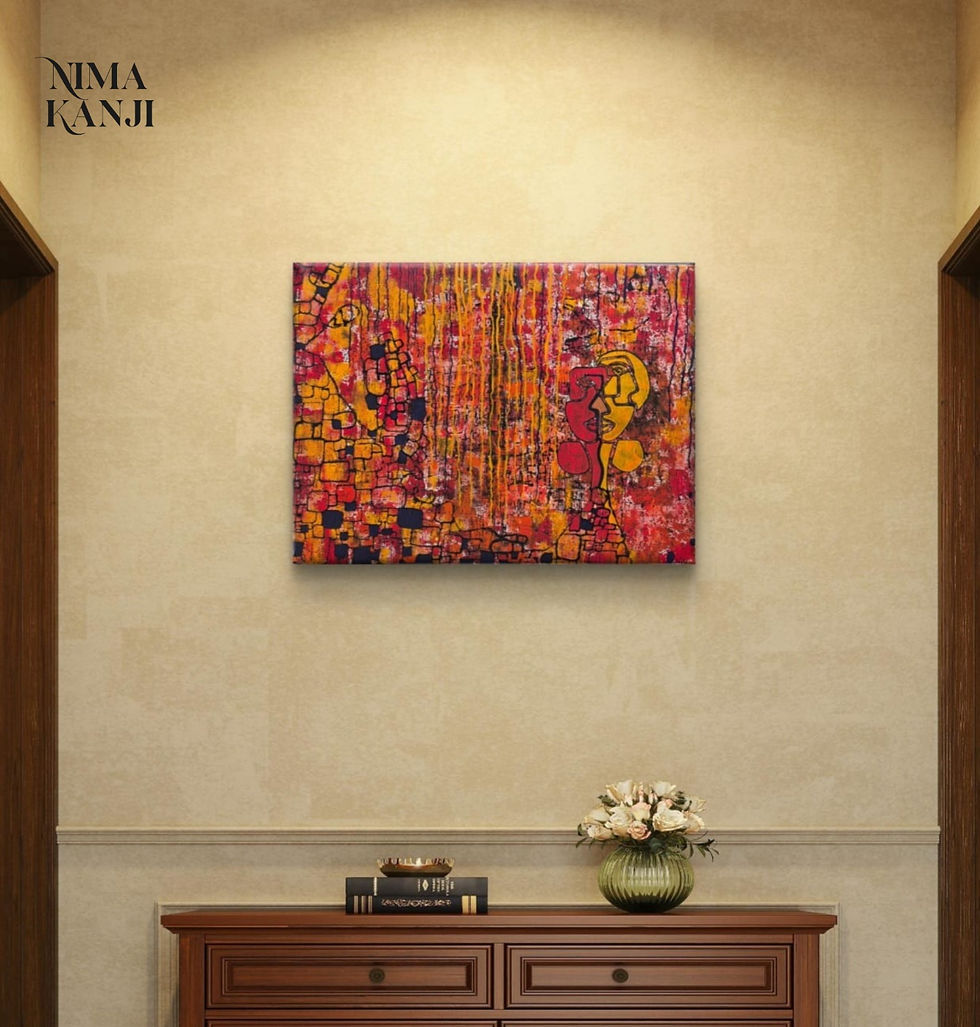
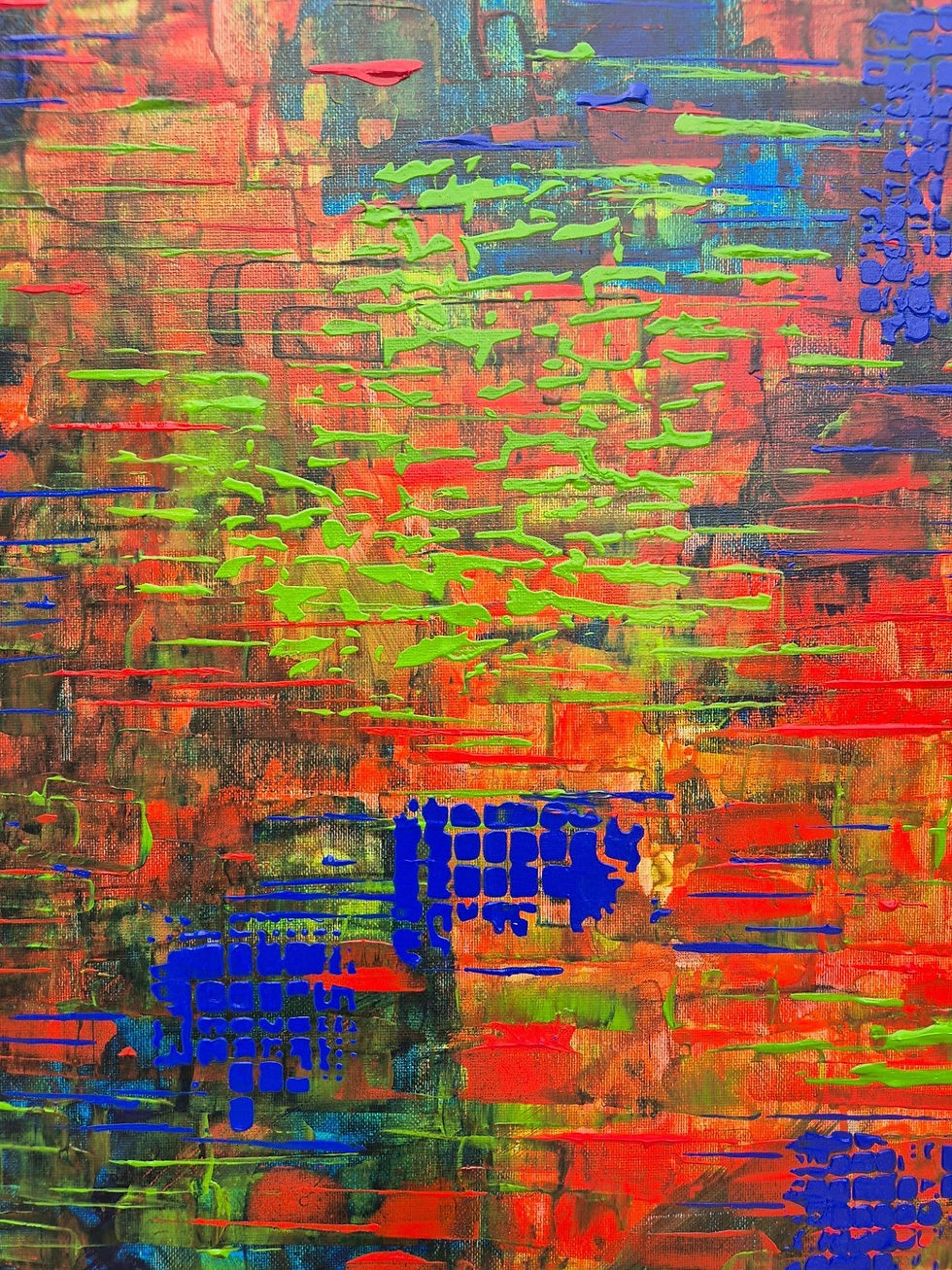
For example, warmer tones like reds and oranges can bring a sense of warmth and energy into a room, making it feel more inviting. Cooler tones like blues and greens can shift things in the opposite direction, creating calm and focus.
That said, most of my work leans towards something a bit bolder. The colours are confident, sometimes a little unexpected, and not really designed to sit quietly in the background. I’m drawn to pieces that hold presence, that can shift the mood of a space and create a different kind of energy depending on how you experience them.
Balancing Abstract Art with Interior Design Styles
One challenge I often hear from designers is how to balance abstract art with existing decor styles. Abstract art can complement many styles, but it requires thoughtful placement.
Minimalist spaces benefit from bold, statement pieces that add personality without clutter.
Eclectic interiors can use abstract art to unify diverse elements through colour or theme.
Traditional rooms may find abstract art a refreshing contrast that modernises the space without overwhelming it.
The Role of Scale and Placement
The size and placement of abstract art can dramatically affect how it influences a room. A small piece might serve as a subtle accent, while a large-scale work can become the focal point.
For home settings, I recommend:
Placing large pieces above sofas, beds, or mantels to anchor the room.
Using smaller works in hallways or bathrooms to add interest without overwhelming.
Considering lighting carefully, as it can highlight textures and colours in ways that change throughout the day.
Art That Holds Space
At the end of the day, I don’t create work to simply fill a wall. I create pieces that are meant to live in a space, to shift how it feels and how people experience it. The right piece of abstract art doesn’t just sit quietly in the background, it brings energy, focus, and presence into a room. And for me, that’s always the goal – to create something that not only stands on its own, but becomes part of the environment around it. Stay tuned for my next blog...
And if you want to see more of the work (and the chaos behind it) check out my Instagram account: @art_by_nimakanji
Comments